
ZER0 Guide (Web Version)
This guide was created to make RenDanHeYi - Haier’s groundbreaking management model - accessible, actionable, and inspiring for organizations and individuals around the world. We chose the name ZER0 as a simpler, more memorable title that embodies the essence of this model:
Unified by purpose. Powered by intelligence.
The “0” stands for technology and AI, while “Zero” represents the ambition to unite people, organizations, and human-AI collaboration with Zero Distance.
ZER0 and this guide will continue to evolve with practical, incremental updates to support its adaptability and relevance.
We hope ZER0 becomes a source of inspiration for leaders and organizations globally, empowering them to embrace The Management Model for the AI Era.



Bill Fischer, Mirko Kleiner, Umberto Lago - 2026
Introduction
Purpose
Markets are volatile and unpredictable. AI is compressing product and decision cycles. Most organizations are still burdened by bureaucracy, slow, and risk-averse. The real question is how to keep pace with the possibilities of AI—because advantage now belongs, more than ever, to those who adapt faster than their competitors. ZER0 addresses this by introducing The Ultimate Management Model for the Age of AI - applicable across industries and organizational sizes.
The result: More innovation. More speed. More engagement. More opportunities. More sustainable growth.
ZER0 champions a Win3 (Win x Win x Win) Mindset for all Ecosystem Participants, creating positive impacts across the economy, society, and environment.
ZER0 encourages better outcomes through the following three ambitions:
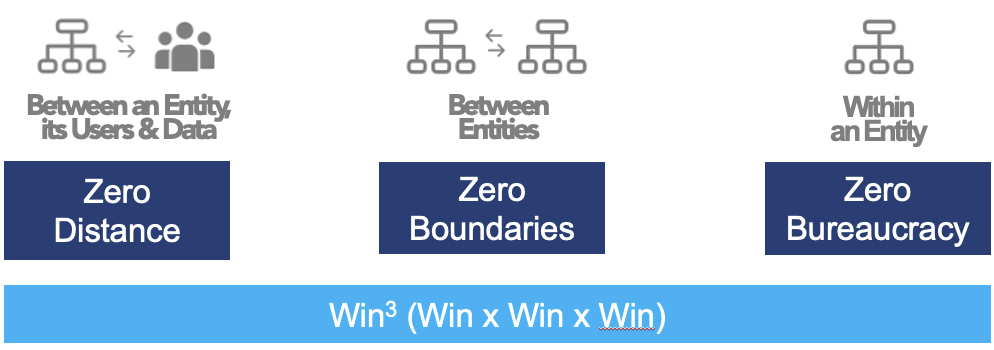
Image 1: Inspired by the talk of Gary Hamel at Haier 09/2024
ZERO Distance between Entities, their Users & Information: ZER0 fosters transparent, direct connections between organizations and users (including customers), aligning every action with user needs and expectations - supported by technology to build continuous feedback and trust sharing the needed information.
ZERO Boundaries between Entities: ZER0 encourages seamless cross-company collaboration, enabling open communication, shared resources and data, and co-innovation to transform transactional relationships into boundary-less partnerships.
ZERO Bureaucracy within an Entity: ZER0 seeks to cut through unnecessary bureaucracy, empowering individuals to make quick decisions, boosting productivity and engagement powered by intelligent choices, and improving horizontal flow of value as a result.
ZER0 can be applied in all industries and various contexts – whether it's setting up and launching a new Project, a new Product / Business Case, a new Product Line or an entire new Value Stream / Supply chain. It is equally useful for Assessing and Continously Improving existing setups, driving Transformation, or Scaling any of the above.
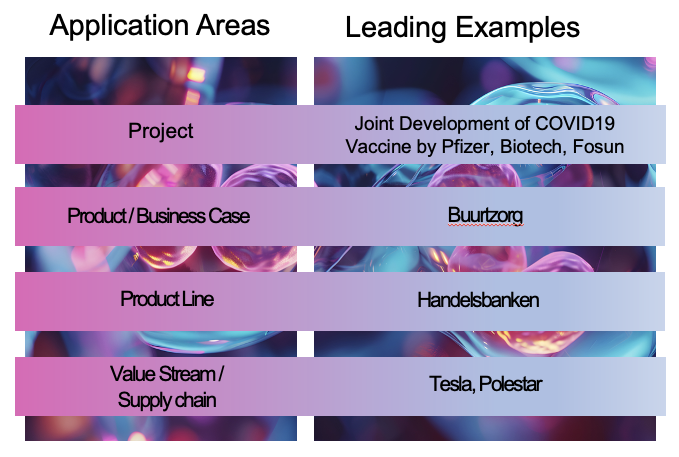
Image 2: Application areas of ZER0
One leading example of collaborative, WIN3 based multi-company product development is the joint creation of the COVID-19 vaccine by Pfizer, BioNTech, and Fosun. What began as a joint project and a shared purpose evolved into a shared product. ZER0-projects have the advantage of getting more engagement from each partner, thus having a higher probability of arriving at a unique, and more compelling, value-proposition.
Another inspiring case is the transformation and continuous evolution of the Swedish bank Handelsbanken, which operates through autonomous cells or micro-enterprises. Tesla and Polestar are also strong examples of companies that have embedded similar principles throughout their supply chains. These organizations are better able than their competitors to understand the customer- and user-journeys that they serve. In many instances, the intimacy they’ve established with their customers and users leads to them knowing their customer/user needs better than these target markets know themselves.
Please note: The application of ZER0 may differ among different industries but the values at its core are the same.
The Cultural DNA of ZER0
ZER0 is built on three fundamental outlooks that shape how the organization in the AI Era understands development, interests, and decision-making. They describe how the system behaves in practice.
Outlook on Development – Unleashing Human Potential
Development in ZER0 means unleashing human potential as the primary driver of growth. Organizations expand when individuals act as entrepreneurs, linking personal aspirations with user/customer needs to create tangible value creation. Entrepreneurial Ownership ensures responsibility for decisions, outcomes, and learning - where freedom, rewards, and accountability fuel innovation and performance.
Development becomes the continuous expansion of human capability in service of meaningful and sustainable value creation – powered by intelligence.
Outlook on Interests – Long-Term Win3
Interests in ZER0 are long-term by design and guided by a true Win3 Mindset. Every ecosystem participant contributes to value creation and shares fairly in the value generated - across individuals, organizations, partners, society, and the environment - creating sustainable prosperity for all.
Transparency, grounded in Openness and Trust as the default state, makes insight and performance visible and alignment intentional - enabling co-innovation and resilient ecosystem growth.
Outlook on Strategy– Learning with Users
ZER0 embraces an outside-in strategy centered on creating sustainable user value. Direct feedback loops and disciplined experimentation ensure that insights translate rapidly into innovation and performance. Organization structures continuously evolve to serve the user, enabling the organization to adapt at speed and convert learning into lasting competitive advantage.
Continuous self-correction becomes the new normal because strategy is no longer centralized but distributed closer to the customer and intentionally designed to learn and adopt.
Organizational Design Principles
ZER0 is a collection of Organizational Design Principles (DP) for the AI era, observed in global organizations applying its values and management principles. Operating models vary by context, reflecting the flexibility of these principles in practice.
Design Principle #1 User
The user (including the customer) is the central focus, with their needs across the entire user journey shaping the organization. In an ecosystem of multiple Micro-Enterprises (MEs), some MEs also serve as internal customers, each with its own specific needs.
Please note: ZERO Distance between entities and their users also means that no internal process nor hierarchy should hinder direct collaboration internally and between internals and the user/customer, or external partners.
Design Principle #2 Micro Enterprise
A Micro-Enterprise (ME) is the foundational unit within an Ecosystem Micro-Community (EMC), often functioning as an independent legal entity with its own business case, balance sheet, enabling entrepreneurs to invest and hold co-ownership. Each ME should have at least one ME Owner, typically elected by the ME members, and is as small as possible and as big as necessary to fulfill its mission independently.
Please note: Typically, MEs evolve from autonomous business units into independent legal entities, while ME Owners may even be elected by its members. External partners are regarded as equals to internal MEs, with similar opportunities to co-invest and share in the success.
Design Principle #3 External Entity
An External Entity (EE) is an organization - or an individual - outside the company’s legal structure that interacts with Micro-Enterprises and Ecosystem Micro-Communities (EMC) as if it were internal. EEs contribute to value creation as external MEs and are entitled to retain a share of the value they help generate.
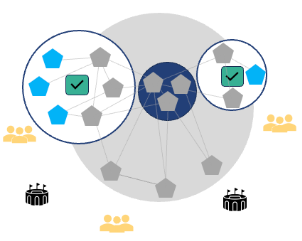
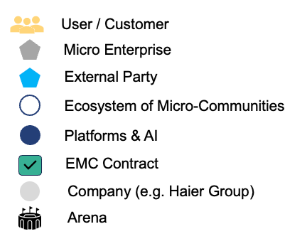
Please note: External partners are treated like internal MEs or EMCs, following the same governance model, co-create and commit to a EMC Contract and enjoying the same rights to autonomy. They are often co-invested in a shared business case.
[1]Inspired by Repeating Pattern in Corporate Rebels Book Start-up Factory, p153
![[1]](https://asc.docs.onlyoffice.com/9.3.1-91d670d41cb7e70d6e7c05beb3adce62/web-apps/apps/documenteditor/main/index.html?_dc=9.3.1-11&lang=en-US&customer=ONLYOFFICE&headerlogo=https%3A%2F%2Fdocspace-31homl.onlyoffice.com%2Fstatic%2Fimages%2Flogo%2Fdocseditor.svg%3Fhash%3D3.6.1.8536&headerlogodark=https%3A%2F%2Fdocspace-31homl.onlyoffice.com%2Fstatic%2Fimages%2Flogo%2Fdocseditor.svg%3Fhash%3D3.6.1.8536&headerlogolight=https%3A%2F%2Fdocspace-31homl.onlyoffice.com%2Fstatic%2Fimages%2Flogo%2Fdocseditorembed.svg%3Fhash%3D3.6.1.8536&type=desktop&frameEditorId=portal_editor&isForm=false&parentOrigin=https://docspace-31homl.onlyoffice.com&uitheme=theme-night&fileType=docx#_ftnref1)
Design Principle #4 Ecosystem of Micro-Communities
If a single ME cannot fully create and deliver user value, multiple MEs join to form an Ecosystem of Micro-Communities (EMC). Like an ME, an EMC is self-organized and manages a broader business case. An EMC Owner acts as the primary contact for its MEs and other EMCs, ensuring alignment and cohesion. Joint objectives across internal and external MEs are established through an EMC Contract. Depending on complexity, an EMC may own a portion or the entirety of a user scenario.
EMCs are fully equipped to create and deliver user value autonously, often including MEs for functions like smart manufacturing, sales, and distribution.
Please note: An EMC is not a technical construct, but a human collaboration space. Its effectiveness depends less on structure and more on trust, shared purpose, and the willingness of participants to learn and evolve together.
Design Principle #5 Platforms & AI
Imagine an environment similar to a startup accelerator - where all essential processes, platforms, and information are provided from the start, enabling anyone to quickly launch and scale a Micro-Enterprise (ME). That’s what ZER0 means by Platforms.
Shared services like finance, HR, and supply chain management are often fully platformized and often transformed from supportive functions into profit centers. Specialized MEs provide user-facing MEs and EMCs with the services, products, tools, and insights needed to launch and operate at a high level of automation. Increasingly, AI and smart contracts are integrated to enhance efficiency, improve transparency, and streamline operations.
Please note: MEs and EMCs have the flexibility to choose between internal or third-party platforms.
Design Principle #6 EMC Contract
An Ecosystem of Micro-Communities (EMC) forms around a shared purpose defined in an EMC Contract - a mutual agreement regularly updated, often monthly. This contract outlines shared goals, tracks EMC progress, and measures the performance of each other. EMCs commonly adapt by replacing under-performing MEs as needed.
Please note: One way to co-create the alignment and a mutual agreement (EMC Contract) among multiple parties is the Lean Ecosystem Canvas.
Design Principle # 7 EMC Alliances / Community
The strength of a loosely coupled organism lies in its adaptability and ability to form partnerships, leveraging existing services and platforms. As such, EMCs frequently collaborate with other EMCs to form EMC Alliances, enabling them to share user insights, co-promote product lines, and enhance overall ecosystem value. Similarly, communities of users emerge, with increasing collaboration from multiple EMCs to better understand needs, enhance engagement, and co-create value.
Please note: Sharing insights on users, emerging needs, and related trends requires access to shared platforms and data. AI is often used to instantly process and extract value from unstructured data.
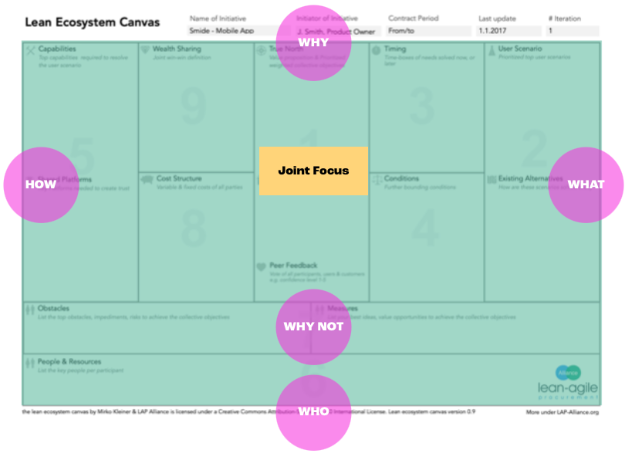
Image 6: Lean Ecosystem Canvas by Mirko Kleiner, LAP Alliance
Design Principle # 8 Arena
MEs and EMCs operate in an arena, not merely within a traditional industry. This broader perspective fuels inspiration and enables them to anticipate disruptive, emerging trends - which can be leveraged to improve their own user journeys.
Please note: While shared platforms and AI can support with insights, everyone within an ME or EMC is expected to actively observe new trends and market shifts - just like true entrepreneurs.
Management Principles
Beyond the cultural DNA and Organizational Design Principles, lie Management Principles (MP) for building and sustaining an adaptive organization or adaptive business ecosystem.
Management Principle #1 Continuous Learning with Users
The first management principle of ZER0 emphasizes a deep commitment to Continuous Learning with Users. ZER0 organizations place ongoing user insight at the center of every decision engaging users as active co-creators. This applies to both the ultimate customers, and users, and all ecosystem participants.
Entrepreneurship is cultivated by placing users – rather than technologies – at the center of the organization’s attention. The starting point is the recognition that users do not seek products as such, but solutions to concrete problems in their lives. Because these solutions evolve over time, the company develops User Scenarios that encompass the entire user journey and are continuously refined through structured feedback loops, experimentation, and direct interaction with real-world contexts, often anticipating needs before users themselves can clearly articulate them.
In this perspective, entrepreneurship consists in the careful observation and interpretation of users’ evolving needs and in the design of solutions that respond to them. Delivering such solutions frequently requires moving beyond the traditional boundaries of the firm and collaborating with other organizations within a broader ecosystem, jointly contributing to the creation of user value.
This management principle builds lifelong user relationships through continuous, user-centered experiences that evolve with changing needs. It is grounded in Continuous Learning with Users and Customers and in Ecosystem Thinking, expanding beyond the boundaries of a single product or service - and beyond organizational boundaries - to create value across the entire ecosystem.
Management Principle
#2 Everyone is an Entrepreneur
ZER0 empowers each individual to act as an autonomous entrepreneur, unleashing human potential to its fullest. ZER0 is built on the belief that individuals perform best when they own outcomes.
With the three rights of autonomy – Decision-Making Right, people and resource control (Assigning Right), and the right to define the Commercial Model, level of participation and rewards (Rewarding Right)– employees are encouraged to seize opportunities, innovate, and drive growth through decentralized decision-making and experimentation. Autonomy varies by regulation and typically expands as organizations mature.
This management principle is grounded in Individual Responsibility and upholds Human Dignity by ensuring that a person’s value and contribution are in their own hands, expressing true entrepreneurial ownership. Those closest to the user/customer should know their needs better than anyone else.
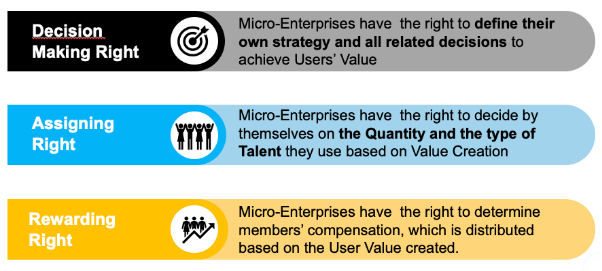
Image 3: Example Decision rights at Haier, source Haier Model Institute (HMI)
Management Principle #3 Minimum Viable Governance
Autonomous Entrepreneurs dynamically re-/form Micro-Enterprises (MEs) around emerging user needs – functioning as adaptive cells within a larger living organism. These MEs self-organize through co-creation, resource-sharing, and collaborative governance. Decision-making authority is placed as close as possible to where value is created. Hierarchy exists only where it adds clear value. Governance is not eliminated – it is redesigned. Temporary structures evolve with context and dissolve when no longer needed. When an ME requires additional support, it strategically seeks allies within and outside the organization to establish an Ecosystem Micro-Community (EMC).
This management principle promotes Minimum Viable Governance — the lightest structure necessary to ensure coherence — enabling rapid adaptation and continuous co-innovation in dynamic markets.
Management Principle #4 Paid by User
This principle emphasizes that the value and viability of an entity are directly tied to user or customer demand. Successful MEs and EMCs grow and expand, while those that do not meet user needs naturally decline, leading to reorganization or adaptation.
Internal MEs — including Platforms — earn their place by delivering value; if they don’t, they can and should be replaced by external alternatives.
This Management Principle fosters a user-driven, adaptive Ecosystem where growth is a direct reflection of value delivered to customers, ensuring continuous alignment with market needs.
Management Principle #5 Ecosystem Thinking
This principle ensures that all participants within the ecosystem – employees, internal and external partners, and stakeholders – have a vested interest in shared success and that the value jointly created is distributed equitably based on real contribution and validated outcomes.
Ecosystems function as ongoing communities of opportunity, where participants collaborate to address evolving user scenarios. These scenarios often require capabilities from multiple organizations, creating solutions that are greater than the sum of individual entities.
For such ecosystems to remain healthy and innovative, participation must stay attractive but never captive. Ecosystem participants could continuously choose to contribute because the ecosystem creates meaningful opportunities, fair rewards, and shared growth.
This Management Principle fosters a culture of Individual Responsibility, shared accountability and mutual benefit, driving sustainable growth and alignment across the ecosystem.
Management Principle #6 Welcome Change & Embrace Experimentation
ZER0 thrives in high-change contexts, as it recognizes that high-change offers more value-propositions and more opportunity.
This requires ongoing experimentation with new products and services, as well as with technology, production methods, and even governance structures themselves.
This management principle is grounded in Openness, fostering iterative development, rapid delivery, and continuous user feedback. By embracing experimentation, learning, the firm accelerates improvement and achieves better, faster, and more cost-effective outcomes.
Adopting ZER0 - Playbook
While the values and principles of ZER0 may appear simple at first glance, their adoption is often more complex and requires thoughtful attention and careful implementation. However, when managed well, they can deliver truly remarkable results.
The following playbook does not describe a single “correct” way to adopt ZER0. Instead, it reflects commonly observed phases and patterns seen across organizations that have successfully moved toward ZER0. Timing, sequencing, and emphasis must always be adapted to context, culture, and constraints.
As mentioned at the beginning of this guide, ZER0 can be applied at various levels - from individual projects, standalone business units, to entire supply chains.
This playbook[1] focuses on adopting ZER0 at the level of a full company. It‘s structured, practical, battle-tested, and most importantly - it works. But be aware:
![[1]](https://asc.docs.onlyoffice.com/9.3.1-91d670d41cb7e70d6e7c05beb3adce62/web-apps/apps/documenteditor/main/index.html?_dc=9.3.1-11&lang=en-US&customer=ONLYOFFICE&headerlogo=https%3A%2F%2Fdocspace-31homl.onlyoffice.com%2Fstatic%2Fimages%2Flogo%2Fdocseditor.svg%3Fhash%3D3.6.1.8536&headerlogodark=https%3A%2F%2Fdocspace-31homl.onlyoffice.com%2Fstatic%2Fimages%2Flogo%2Fdocseditor.svg%3Fhash%3D3.6.1.8536&headerlogolight=https%3A%2F%2Fdocspace-31homl.onlyoffice.com%2Fstatic%2Fimages%2Flogo%2Fdocseditorembed.svg%3Fhash%3D3.6.1.8536&type=desktop&frameEditorId=portal_editor&isForm=false&parentOrigin=https://docspace-31homl.onlyoffice.com&uitheme=theme-night&fileType=docx#_ftn1)
There’s not a switch for ZER0 - it’s a Journey. And it’s messy.
Please note: ZER0 has no final state. It evolves continuously as user needs, markets, technologies, etc. change. Any attempt to “finish” a ZER0 Adoption is a signal that learning has stopped.
[1] This playbook was inspired by Umberto Lago’s approach, the co-author’s transformation experience and the Corporate Rebels’ February 2025 Newsletter, which traces its roots back to Jabi Salcedo’s K2K methodology.
Step 1: Get Your House in Order
Before you even think about making the leap, talk to the people who can kill the adoption before it even starts:
Owners: Beside understanding the value & principles of ZER0 do also re-evaluate the current culture and purpose with them. If they don’t agree on the benefits, you’re doomed. ZER0 isn’t something you “try” - it’s a fundamental shift in how a company operates. If the owners aren’t 100% in, don’t bother.
Managers: Some will thrive in the new world. Some won’t. The key is honest conversations. Can they evolve into an entrepreneurial role? Do they want to? If not, work together to find them another role - or a way out.
Influencers: Influence matters more than hierarchy. Some informal leaders will become catalysts. Some won’t. The key is honest conversations. Are they ready to use their influence to create value? If not, reshape where that influence sits - or let it go.
Unions: In industrial settings, unions are a fact of life. At ZER0, unions don’t get special status once its values and principles kicks in. No backroom deals. No special committees. Everyone makes decisions with consent. If unions don’t like it, they at least need to understand it.
Why this matters:
✔ Stops resistance before it snowballs.
✔ Filters out people who can’t (or won’t) adapt.
✔ Avoids legal and structural nightmares down the road.
Step 2: Get Employees Involved Early
ZER0 doesn’t work unless people actually want it.
Educate: Books, articles, videos, case studies. Give people time to wrap their heads around what this means.
Expose: Organize company visits so employees can see it in action. Once they meet real people working based on the values and principles of ZER0, it stops feeling like a crazy experiment.
Peer Feedback: At the end of this phase, hold a general assembly with all involved employees. If 80% vote “yes,” you proceed. If not, you don’t. No forcing. No top-down mandates. No pressure.
Why this matters:
✔ Eliminates the “we didn’t sign up for this” excuse.
✔ Builds momentum by showing real-world examples.
✔ Creates a clear mandate for change.
Please note: Depending on your business’s urgency and financial situation, the peer-feedback process -and its 80% approval rule - might seem counter-intuitive. After all, what's the alternative - giving up? However, peer feedback is a powerful indicator of how well the previous steps were executed and whether employees truly understand the need for change and support it.
Step 3: Diagnose & Design before you Operate
Once employees say yes, the deep dive begins.
Interviews: Sit down with all employees. What’s working? What’s broken?
Values Check: Rank the company on the 10 key values that you think are most important - for example, transparency, trust, equality, personal development, freedom, etc.
Reality Check: By the time you’ve interviewed 50% of employees, you already know 90% of the answers. But this step isn’t about new information - it’s about making people feel heard.
Find your way: Take the values, principles and repeating patterns of ZER0 as inspiration, add the learnings from the diagnose and collaboratively design the next level of detail – your own new management model
Why this matters:
✔ Helps you avoid fixing things that aren’t broken.
✔ Surfaces real pain points (not just what leaders think is wrong).
✔ Builds trust—because people will not trust a system they had no voice in designing.
✔ Implement your way that fits your context
Step 4: Move Fast or Get Stuck in Chaos
This is where companies screw up. They say, “Let’s go slow so people can adjust.” Wrong. Slow kills momentum. Slow confuses people. Slow creates chaos. Once people are on board, you act fast.
EITHER
Establish Pilot Cases – If time allows and the organization is new to the values and principles of ZER0, pilot case/s can provide a safe space for experimentation and learning.
OR
Establish Autonomous Business Units – It’s recommended to begin adopting ZER0 within a new business or an existing unit that is struggling and actively seeking improvement.
The first four changes happen immediately:
Delegating Authority
No more “bosses.” Instead, self-managed MEs with self-selected members and chosen representatives take over. Implement your new governance including a scaled impediment backlog and at least ME/EMC Owner and entrepreneur roles.
For major decisions, use an 80% consent model - no endless debates, no single person holding progress hostage.
Radical Transparency
The traditional profit and loss (P&L) system is replaced with a simplified, open-book model so that everyone understands the financial situation of the company.
Salaries, expenses, and financial results are transparent to the members of the MEs and EMCs.
Impediments are known and continously jointly prioritized
Redesigning Salaries & Profit-Sharing
Simplified levels to 4-7 levels depending at your company size.
Income fairness: Over time, the gap between the top 10% and bottom 10% of earners shrinks to a max of 2.5x.
Profit-sharing: part of the company’s and/or ME/EMC profits are distributed among employees. Let the ME/EMCs find their own way.
Update Strategy & Objectives
Update strategy in new constellation and create mutual objectives along all MEs in the EMC
Create your first EMC Contract and review / update it on a monthly basis
Why this matters:
✔ Eliminates uncertaintyv - people know the new structure now, not six months from now.
✔ Creates financial fairness while maintaining incentives.
✔ Stops the organization from slipping back into old habits.
✔ Business Continuity is ensured
✔ Impediments are tracked from the start and give inspiration for continuous improvement
Please note: Regardless of the approach, the first movers will be in the spotlight, with the entire organization watching their outcomes closely.
Step 5: Train People how to function as Entrepreneurs
If you think people can just “figure it out,” you’re setting them up for failure.
These trainings are not optional.
How to make decisions without a boss telling you what to do.
How to handle conflict without running to HR.
How to read finanical statements.
How to co-invest and participate in a business case
How to build trust (and avoid breaking it).
How to co-develop the governance of an ME / EMC.
How to collaborate.
how to innovate.
Why this matters:
✔ Makes the transition way less painful.
✔ Stops minor issues from escalating into company-wide drama.
✔ Ensures people don’t default back to old habits.
Please note: Expect employees go through 40-80 hours of training to build these skills. It’s not just about learning - it’s about creating a common language so everyone is on the same page.
Step 6: Celebrate, Adjust, Iterate, Improve
No company gets it perfect on Day 1. ZER0 isn’t a destination - it’s a system that keeps evolving
Create Champions: Celebrate Learnings, Results & Promote best cases
Keep learning: Employees visit other self-managed companies to get fresh ideas.
Keep refining: Structures shift. Roles change. People adapt.
Keep questioning: If something doesn’t work, change it. There’s no “final version” of ZER0.
Why this matters:
✔ Prevents the transformation from stagnating.
✔ Encourages a culture of continuous improvement.
✔ Reinforces that ZERO is not a one-time event—it’s a mindset.
Partial adoption of purpose
Lack of adaptation of ZER0 to fit existing culture
Lack of communication/training
Trouble Shooting
This final section serves as a DIY troubleshooting guide for common challenges in adopting ZER0 —highlighting typical problems, their causes, and practical solutions.
This troubleshooting section is not just about solving problems; it's also a practical tool to help youanticipate potential difficultiesandprepare for them.
Problem
Employees feel lost and do not clearly understand the new model
Possible Cause
Lack of alignment between company purpose and ZER0
Possible Cause
Review the purpose of ZER0 and provide seamless alignment with your purpose
Verify adoption of purpose and check for possible loopholes
Make sure that the language you use is clearly understood within your company. Make an effort to make it understandable
Reinforce communication and training
Employees are reluctant to evolve into entrepreneurs
MEs pursue their own goals and there is no coordination among them
Organizational inertia
Lack of communication/training
Managers’ attitude/age/habits
High salaries/benefits/welfare
Undefined benefits/career/risks
Employees feel unprepared for the role
National labor regulations prevent the creation of large profit-sharing schemes
Lack of a robust information and feedback system
Managers resist the shift of power towards employees
Reinforce the message that shifting power to employees is part of the purpose of the model, and redefine compensation policies to incentivize adherence to new values
Reinforce communication and training for managers
Dismiss managers and hire new ones
Devise incentive plans to overcome existing salaries/benefits/welfare, and dismiss employees and hire new ones
Create a very clear path for employees, use pilots as an example
Reinforce training, provide positive examples
Devise incentive plans that build on national regulations but remain compelling
Review your information system and reinforce it
MEs don’t have enough support from platforms
Level of conflict among MEs and between MEs and platforms is too high
Lack of broader goals
Lack of clear directives for platforms
Lack of/wrong incentives for platforms’ entrepreneurs
Incentives on individual performance are too strong compared to incentives on collective performance
Contracts are too aggressive.
Create Ecosystems of Micro Communities. Create incentives that promote coordination and achievement of broader goals
Review directives and goals for platforms
Review platforms’ incentives and align them with corporate goals
Review incentive policy and assign more weight to collective performance
Review contract format and Create a conflict resolution committee